2027 Health Insurance Rates Are Rising: What Employers Need to Know
Health insurance costs continue to place pressure on employers, employees, and families across the country. As insurers begin releasing their proposed rates for 2027, employers are already seeing signs that another year of significant premium increases may be ahead.
Minnesota is following the national trend. Proposed 2027 rates show double-digit increases across both the individual and small-group health insurance markets, with every Minnesota carrier proposing an increase of 10% or more.
For employers preparing for the 2027 benefits year, these increases make it important to evaluate current health plan strategies, understand what is driving costs, and consider alternative approaches that can provide employees with meaningful coverage while giving employers greater control over their benefits budgets.
What Are Health Insurance Rates Expected to Increase By in 2027?
Nationally, the early outlook points to another year of substantial premium increases.
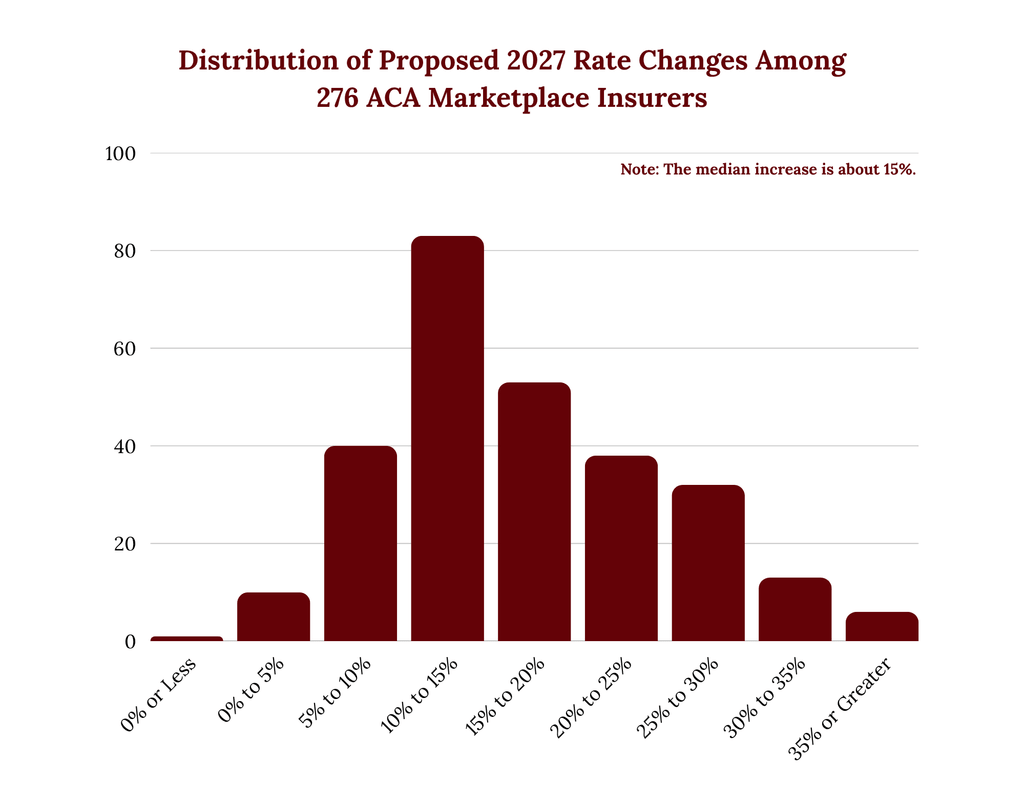
According to an analysis from the Peterson Center on Healthcare and KFF, 276 insurers participating in the ACA Marketplace across all 50 states and Washington, D.C. have proposed a median premium increase of approximately 15% for 2027. This follows a median proposed increase of 18% for 2026. If the proposed increases hold, typical ACA Marketplace premiums will have increased by more than one-third over a two-year period.
Minnesota’s 2027 Proposed Rates
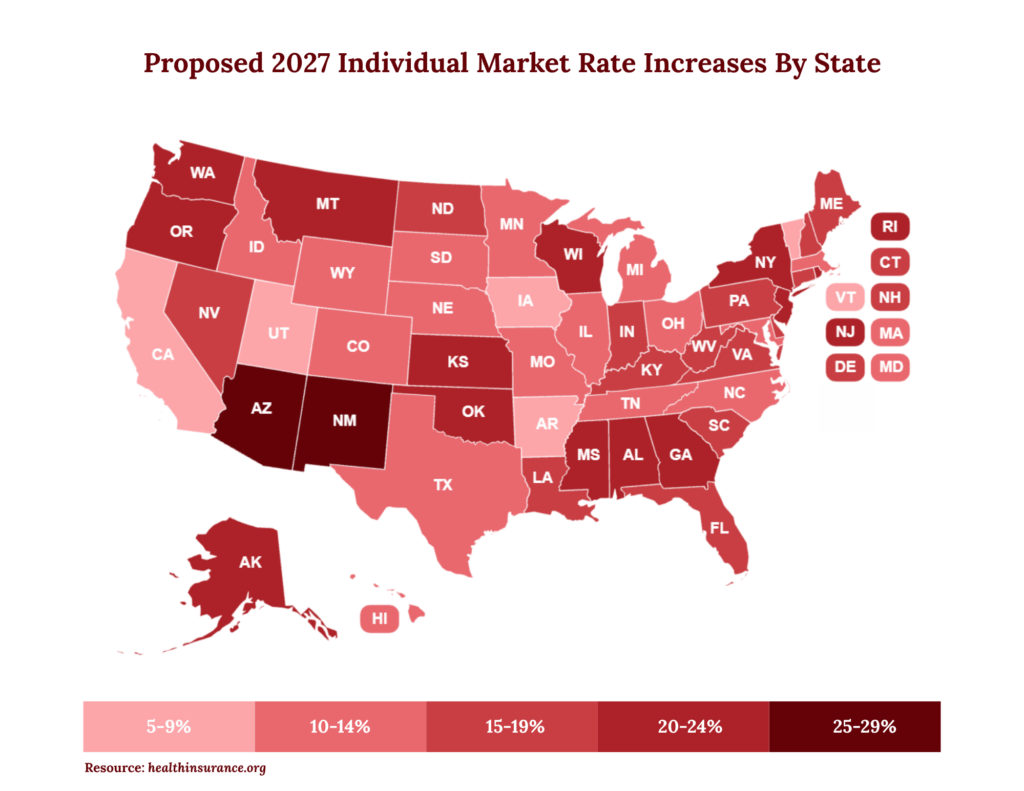
Minnesota’s proposed 2027 individual-market rates are below the national median, with a weighted average proposed increase of approximately 11.9%. Even at that level, every Minnesota carrier is proposing a double-digit increase, signaling continued pressure on the cost of individual health coverage.
The Minnesota Department of Commerce filings show proposed individual-market increases ranging from 10.0% to 13.0%:
|
Minnesota Carrier |
Proposed 2027 Individual Market Increase |
|
Blue Plus |
10.3% |
|
HealthPartners, Inc. |
12.4% |
|
HealthPartners Insurance Company |
12.3% |
|
Medical Insurance Company |
13.0% |
|
Quartz Health Plan MN |
10.0% |
For Minnesota employers, the proposed rates in the small-group market are particularly important. Every carrier is also proposing a double-digit increase, with proposed increases ranging from 10.0% to 21.4%.
|
Minnesota Carrier |
Proposed 2027 Small-Group Market Increase |
|
Blue Cross Blue Shield of MN |
11.9% |
|
Blue Plus |
10.0% |
|
HealthPartners, Inc. |
12.5% |
|
Medical Insurance Company |
18.9% |
|
Quartz Health Plan MN |
12.4% |
|
Sanford Health Plan of MN |
14.5% |
|
UnitedHealthcare Insurance Company |
21.4% |
|
UnitedHealthcare of Illinois, Inc. |
19.2% |
These filings show that Minnesota employers could see substantial differences depending on their carrier and plan. For employers already managing rising healthcare expenses, increases of this magnitude can have a significant impact on the overall benefits budget.
These figures are based on carriers’ proposed 2027 rates and are subject to the applicable rate-review process.
Why Are Health Insurance Premiums Increasing?
There is no single reason behind the projected 2027 increases. Insurers are accounting for several factors that are increasing the cost of providing healthcare.
1. The Cost of Healthcare Continues to Rise
The largest factor identified in the 2027 rate filings is the underlying cost of medical care.
According to KFF’s review of insurer filings, the median projected increase in the underlying cost of medical care and prescription drugs, often referred to as medical trend, is approximately 10% for 2027. That compares with an average medical trend of approximately 8% in recent years.
Higher costs are showing up across healthcare services, including:
- Hospital services
- Physician services
- Outpatient procedures
- Prescription drugs
- Behavioral health services
- Medical staffing and labor
- Provider reimbursement rates
When the cost of providing healthcare increases, insurers incorporate those expected costs into their premium calculations.
2. Prescription Drug Costs Are Adding Pressure
Prescription drug spending is another significant factor influencing premiums.
High-cost specialty medications and the growing use of GLP-1 medications are receiving particular attention in 2027 insurer filings. Some insurers have reported significant increases in GLP-1 utilization and costs, while others have adjusted coverage policies to manage their impact.
Prescription drug costs can affect both individual and employer-sponsored health plans, making pharmacy strategy an increasingly important part of benefits planning.
3. Higher Labor and Provider Costs
Healthcare organizations continue to face workforce shortages and higher labor costs. Providers may seek higher reimbursement rates from health plans to account for increased staffing expenses and other operating costs.
Insurers cited healthcare labor costs, provider contract negotiations, and broader economic inflation among the factors contributing to higher projected medical costs for 2027.
4. Increased Utilization and Claim Severity
Insurers are also seeing changes in how much healthcare people use and the complexity of claims. More frequent medical services, higher-acuity care, outpatient surgeries, behavioral health utilization, and other changes in healthcare utilization can increase the amount insurers pay in claims.
5. Changes in the ACA Marketplace
The individual insurance market is also being affected by changes to federal premium assistance.
Enhanced federal premium tax credits expired at the end of 2025. The change has affected Marketplace enrollment and the composition of the individual-market risk pool. KFF reports that many healthier individuals left the Marketplace after their financial assistance decreased, leaving a pool with higher average healthcare needs. Insurers are incorporating the resulting changes into their 2027 rate assumptions.
KFF estimates that this change in the risk pool could add approximately 4 percentage points to premiums in 2027 for insurers accounting for the impact in their rate filings.
What Do Rising Rates Mean for Employers?
For employers, higher insurance premiums can affect the entire benefits strategy.
An employer facing a 15% renewal increase on a $10,000 annual premium would see the annual cost rise to approximately $11,500 per employee before considering any changes to plan design or employee contributions.
For an organization with hundreds of employees, even a moderate percentage increase can translate into a substantial increase in the annual benefits budget.
Employers may respond by reviewing plan designs, changing contribution strategies, adjusting employee cost-sharing, evaluating carrier options, or exploring alternative funding arrangements.
Each approach can affect employees differently, which makes careful evaluation and communication especially important.
What Can Employers Do About Rising Health Insurance Costs?
There are several strategies employers can consider as they prepare for 2027.
Review the Current Plan and Renewal
Start by taking a detailed look at the current health plan and proposed renewal.
Employers should review:
- The proposed premium increase
- Employee and employer contribution levels
- Deductibles and out-of-pocket maximums
- Network changes
- Prescription drug coverage
- Utilization and claims experience
- Employee participation
- Available carrier alternatives
- The total cost of the benefits package
A renewal percentage provides only one piece of the overall picture. Employers should evaluate the total value and cost of the plan before deciding how to proceed.
Evaluate Plan Design
Employers can also examine whether the existing plan design continues to align with their workforce.
Changes to deductibles, copayments, coinsurance, employer contributions, and plan options may help manage costs. These decisions should be evaluated carefully because shifting additional costs to employees can affect affordability, employee satisfaction, and participation.
Consider Alternative Funding Strategies
Employers looking for a different approach may want to evaluate account-based benefits, including an Individual Coverage Health Reimbursement Arrangement (ICHRA).
ICHRA: An Alternative Approach for 2027
As employers look for ways to manage rising healthcare insurance costs, ICHRA is gaining momentum as an alternative approach to traditional group health coverage. The growth of ICHRA adoption reflects increasing interest from employers looking for greater flexibility in how they structure and budget for health benefits.
An ICHRA allows an employer to provide employees with a defined employer-funded allowance that employees can use toward individual health insurance premiums and, depending on plan design, other eligible medical expenses.
Instead of selecting one group health plan for the entire workforce, employees receiving an ICHRA can select individual health insurance coverage that fits their needs and circumstances.
How an ICHRA Can Help Employers Manage Rising Costs
One of the primary features of an ICHRA is the employer’s ability to establish a defined contribution amount.
For example, rather than absorbing the full cost of an increasingly expensive group health plan, an employer can establish an annual ICHRA allowance for eligible employees. The employer determines the contribution amount according to the plan’s design and applicable rules. This can provide employers with greater predictability when budgeting for healthcare benefits.
Employees then use the available funds toward eligible individual coverage and medical expenses. Because employees shop for their own individual health plans, they can consider options based on their preferred doctors, prescription medications, networks, coverage levels, and household needs.
For employers, this can create an opportunity to approach benefits spending with a defined budget while still offering employees meaningful health coverage choices.
ICHRA Can Provide More Individualized Coverage Choices
Traditional group health plans generally require employees to select from the options offered by the employer.
With an ICHRA, employees can shop for individual coverage available in their area. This can be particularly valuable for a workforce with diverse healthcare needs.
An employee who prioritizes a particular provider network may select a plan based on that network. Another employee may place greater importance on prescription coverage, premiums, deductibles, or out-of-pocket costs.
The ability to choose coverage based on individual circumstances can make the benefits experience more personalized.
ICHRA Requires Careful Planning
ICHRA can be a valuable strategy, but implementation requires careful planning.
Employers need to evaluate employee classes, contribution amounts, affordability requirements, plan documentation, required notices, individual plan availability, and administrative responsibilities.
For applicable large employers, ICHRA affordability is determined using the lowest-cost silver plan for self-only coverage in the employee’s location, with specific rules and safe harbors available for determining affordability.
Employees who are offered an ICHRA also have specific rules governing eligibility for premium tax credits. The IRS explains that an employee offered an ICHRA generally cannot receive a premium tax credit while receiving the ICHRA unless the ICHRA is considered unaffordable and the employee opts out of the ICHRA reimbursements and meets the other requirements for the credit.
For these reasons, employers considering ICHRA should work with an experienced benefits administrator and benefits advisor to evaluate the strategy and ensure the plan is designed and administered correctly.
Preparing for 2027
The 2027 rate filings provide an early look at the continued pressure facing the health insurance market. Nationally, insurers are proposing a median increase of approximately 15% in the ACA Marketplace. In Minnesota, individual-market proposals are generally in the 10% to 13% range, while small-group proposals range from 10% to more than 21% among the carriers listed by the Minnesota Department of Commerce.
The final rates will depend on regulatory review, carrier decisions, plan selection, and market conditions. Employers should also remember that a proposed market-wide rate does not necessarily equal the increase for a specific employer.
The larger takeaway for employers is the importance of proactive benefits planning.
Healthcare costs continue to rise, and employers need strategies that balance budget management, employee affordability, and access to quality coverage. Traditional group health plans remain an important option for many organizations, while ICHRA provides another approach that can give employers greater control over their contribution strategy and employees greater flexibility in selecting individual coverage.
For Minnesota employers preparing for 2027, now is the time to review the numbers, understand the available options, and determine which strategy best fits the needs of both the organization and its employees.