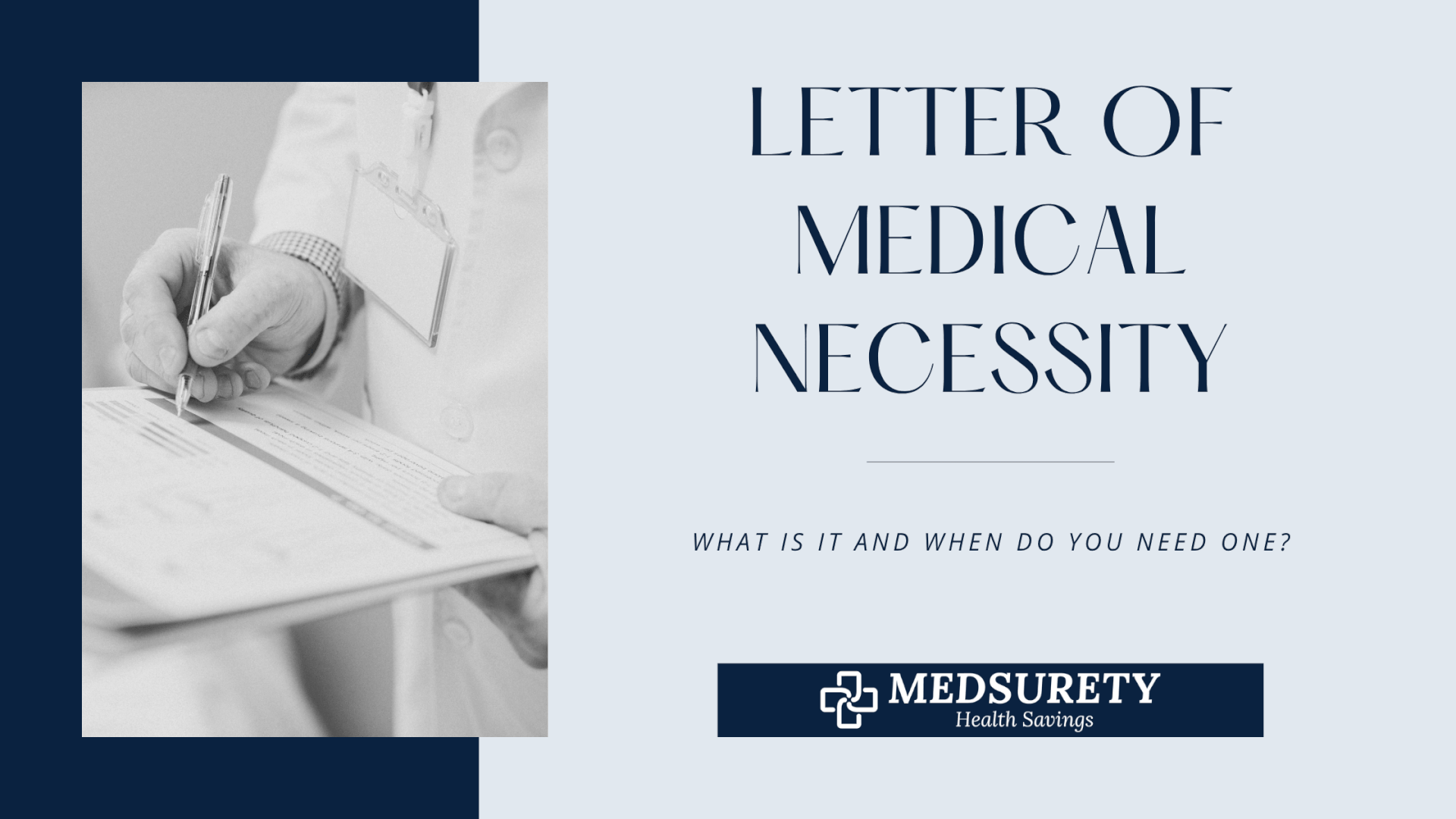
What is a Letter of Medical Necessity and When Do You Need One?
In today’s healthcare and benefits landscape, employees and plan participants have access to a wide range of tax-advantaged accounts and insurance options. Alongside these opportunities comes the need for clear documentation to support certain expenses. One of the most important documents in this process is a letter of medical necessity.
A letter of medical necessity plays a central role in determining whether a treatment, product, or service qualifies for reimbursement or coverage. Understanding what it is, how it works, and when it is required can help individuals navigate their benefits with confidence.
What is a Letter of Medical Necessity?
A letter of medical necessity (LMN) is a formal document written by a licensed healthcare provider that explains why a specific treatment, service, or product is required for a patient’s medical care. This document confirms that the recommended item or service is essential for diagnosing, treating, or preventing a medical condition.
An LMN serves as supporting evidence when an expense is not automatically recognized as eligible under standard guidelines. It establishes that the expense is tied directly to a diagnosed condition rather than general health or personal preference.
Why Letters of Medical Necessity Are Important
Healthcare accounts such as health savings accounts (HSAs), flexible spending accounts (FSAs), and health reimbursement arrangements (HRAs) allow individuals to use pre-tax dollars for qualified medical expenses. Some expenses fall outside clearly defined eligibility lists. In these cases, a letter of medical necessity provides the documentation needed to justify the expense.
This documentation is important for several reasons:
- It supports reimbursement requests for services or products
- It helps insurance carriers evaluate coverage decisions
- It ensures compliance with IRS guidelines for eligible medical expenses
- It provides a clear medical rationale tied to a diagnosis
A properly completed LMN strengthens the likelihood that an expense will be approved, although approval is not guaranteed.
When You May Need a Letter of Medical Necessity
A letter of medical necessity is typically required when an expense is not automatically classified as eligible but may qualify with proper documentation.
Situations where an LMN is often required include:
1. FSA, HSA, or HRA Reimbursement
Certain products or services require additional verification before reimbursement. Examples include:
- Nutritional supplements or vitamins
- Exercise programs or gym memberships
- Weight-loss programs tied to a medical condition
- Alternative therapies such as acupuncture or chiropractic care
- Massage therapy prescribed for a specific condition
These items may qualify when a provider confirms their medical purpose.
For additional examples of expenses that may be considered eligible with a letter of medical necessity, refer to this resource: Examples of Potentially Eligible Expenses Requiring an LMN.
2. Insurance Coverage Determinations
Insurance companies may request an LMN when reviewing claims for treatments, equipment, or services that fall outside standard coverage.
Examples include:
- Durable medical equipment
- Specialized therapies
- Certain medications or procedures
The letter provides the clinical justification needed to evaluate the request.
3. Non-Standard or “Dual-Purpose” Expenses
Some expenses can serve both medical and general wellness purposes. An LMN clarifies that the expense is being used to treat a diagnosed condition.
Examples include:
- Orthopedic shoes or inserts
- Counseling services
- Special diets for medical conditions
- Home or lifestyle modifications related to care
4. Tax Documentation and Compliance
In some cases, individuals may need an LMN to substantiate medical expense deductions or to maintain proper documentation for tax purposes.
What a Letter of Medical Necessity Includes
A complete and effective LMN contains specific details that establish medical necessity. While formats may vary, most letters include:
- Patient name
- Diagnosis or medical condition
- Description of the recommended treatment, product, or service
- Explanation of why the recommendation is medically necessary
- Duration of treatment or expected timeframe
- Healthcare provider’s name, credentials, and signature
- Date of issuance
For a more detailed breakdown of what is required for IRS-compliant documentation—including examples and guidance you can share with providers—refer to this resource: IRS-Compliant Documentation Requirements.
These elements ensure that the letter clearly connects the recommended expense to a legitimate medical need and aligns with IRS requirements for reimbursable healthcare expenses.
Who Can Write a Letter of Medical Necessity?
A letter of medical necessity must be written and signed by a licensed healthcare provider who is actively involved in the patient’s care.
This may include:
- Physicians
- Nurse practitioners
- Chiropractors
- Physical or occupational therapists
- Psychologists or psychiatrists
The provider must be able to document the diagnosis and explain the medical reasoning behind the recommendation.
How to Obtain a Letter of Medical Necessity
Obtaining an LMN is a straightforward process:
- Consult your healthcare provider
Discuss your condition and the treatment or product in question. - Request documentation
Ask the provider to prepare a letter that outlines the medical necessity. - Review for completeness
Ensure all required elements are included, such as diagnosis and duration. - Submit with your claim
Provide the LMN along with receipts or supporting documentation to your plan administrator or insurer.
Following these steps helps ensure that your request is processed efficiently.
Common Mistakes to Avoid
Even well-intentioned letters of medical necessity can be denied if they are missing key details or are written too broadly. The following are common pitfalls, along with how they can be addressed:
- Being Too Vague: General statements such as “this treatment will improve the patient’s health” are not sufficient. The letter should clearly connect the treatment to a specific diagnosis and explain how it addresses the patient’s condition. Example: Instead of stating “massage therapy will reduce stress,” a more effective statement would be: “Massage therapy is recommended to relieve chronic neck pain due to cervical radiculopathy (ICD-10: M54.12), which has not responded to medication or physical therapy.”
- Omitting a Clear Treatment Recommendation: The provider should specify exactly what is being recommended, including the treatment, product, or service, along with relevant details such as frequency, duration, or dosage. Example: Rather than writing “exercise,” the letter should state: “Three months of supervised gym-based resistance training, three times per week, to manage insulin resistance and support weight loss in a patient with prediabetes (ICD-10: R73.03).”
- Leaving Out Supporting Evidence: The recommendation should be supported by clinical documentation when appropriate. This may include medical records, diagnostic results, or prior treatment history that demonstrates the need for the recommended care. Example: When recommending a therapy for chronic joint pain, the letter should reference imaging results and clinical notes that document the condition and prior treatment outcomes.
- Missing Provider Credentials, Signature, or Date: An incomplete letter may be delayed or rejected. The document should always include the provider’s full name, credentials, signature, and date of issuance to meet documentation standards.
How Long a Letter of Medical Necessity is Valid
Many letters of medical necessity are valid for a defined period, often up to 12 months, depending on the treatment and plan requirements. If treatment continues beyond that timeframe, a new letter may be required to confirm that the medical need still exists.
Key Considerations
- A letter of medical necessity does not guarantee approval of a claim
- Requirements may vary by insurance carrier or benefits administrator
- Documentation must align with plan guidelines and IRS regulations
- Keeping a copy for your records is recommended
Understanding these considerations helps set appropriate expectations when submitting a request.
Final Thoughts
A letter of medical necessity is a critical tool in bridging the gap between medical recommendations and benefits eligibility. It provides clear, provider-backed documentation that supports the use of healthcare funds and insurance coverage for a wide range of services and products.
For individuals using FSAs, HSAs, or other benefit programs, knowing when and how to obtain an LMN ensures smoother reimbursement processes and stronger compliance with plan requirements.